
Google PPC vs. Facebook (Meta) Ads for Motivated Seller Leads (2026)
Search ads capture intent; social ads create demand. Here's how Google PPC and Facebook/Meta ads really compare for motivated-seller leads — cost, intent, speed, and when to run each (or both).
On this page
Once you're ready to buy inbound leads instead of only chasing them, the question is: Google or Facebook? They're both "paid ads," but they work in opposite directions — and picking wrong burns budget fast.
Here's the honest comparison for motivated-seller lead generation.
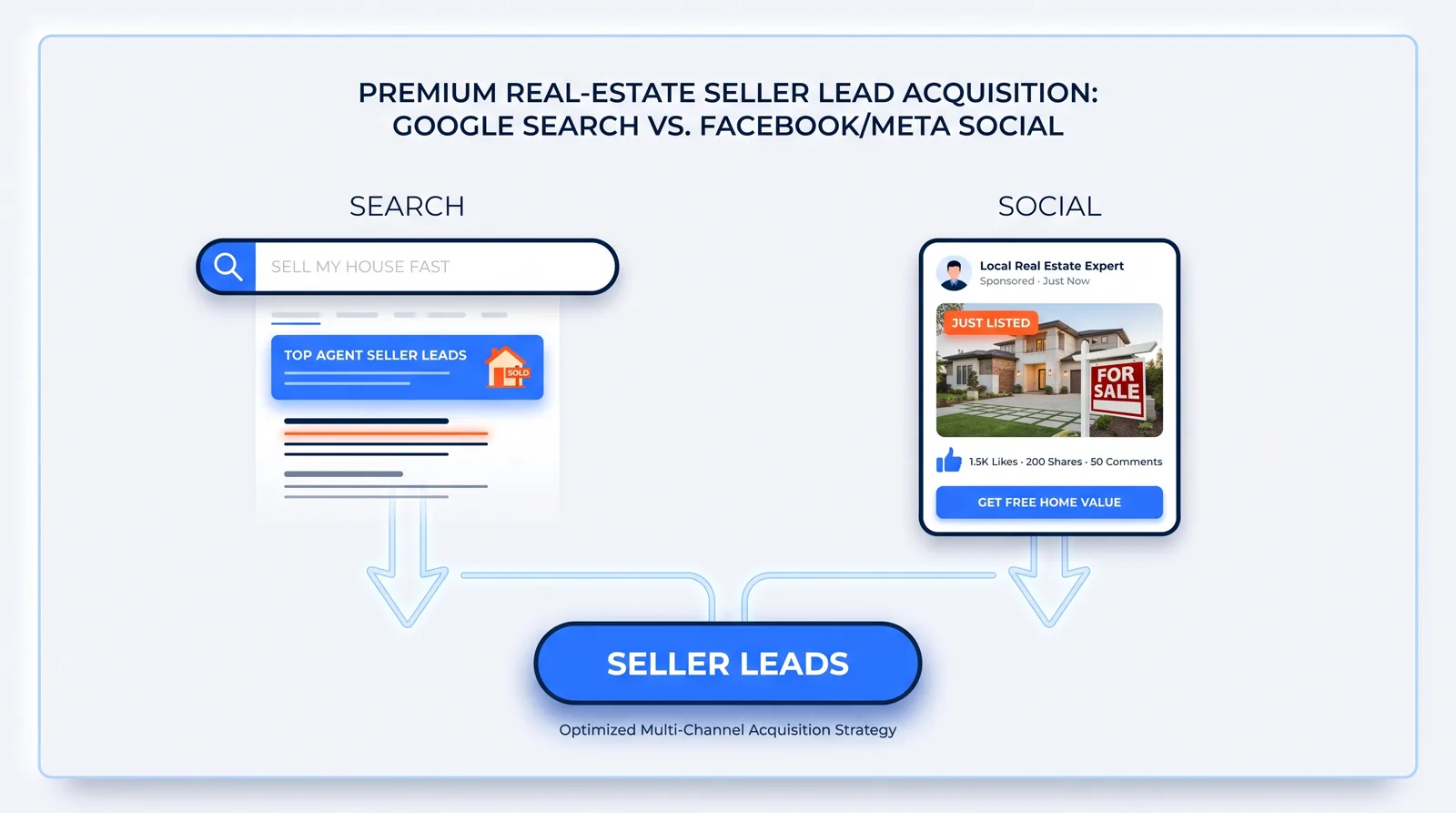
The core difference: intent vs. interruption
- Google PPC captures intent. Someone types "sell my house fast" — they already want to sell. You show up at the exact moment of demand.
- Facebook / Meta creates demand. You interrupt homeowners scrolling their feed and plant the idea. They weren't looking; you made them look.
That single difference drives everything else — cost, lead quality, and how you have to follow up.
Head to head
| Google PPC | Facebook / Meta ads | |
|---|---|---|
| Lead intent | High (actively searching) | Lower (interrupted) |
| Cost per lead | Higher | Lower |
| Lead volume | Lower, steadier | Higher, spikier |
| Speed to first leads | Fast once approved | Fast |
| Follow-up urgency | High | Very high |
| Best for | Warm, ready-to-sell | Volume + retargeting |
When Google PPC wins
- You want warmer leads that are closer to a decision.
- You can afford a higher cost per lead in exchange for quality.
- Your market has real search volume for selling-related terms.
The downside: it's competitive and pricey, and you're limited by how many people are actively searching in your area.
When Facebook / Meta wins
- You want volume and a lower cost per lead.
- You're willing to nurture — these leads are colder and need more follow-up.
- You want retargeting: re-touch people who engaged but didn't convert.
The downside: lower intent means more tire-kickers, so your qualifying and follow-up have to be tight or you'll waste spend.
The trap both channels share: slow follow-up
Paid leads are expensive, and their value decays by the minute. A Facebook lead answered in 5 minutes converts dramatically better than one called back in an hour. Yet most wholesalers pay for leads and then let them sit in a CRM.
If you're going to buy attention, you have to answer it instantly — every time, day or night. That's precisely the gap AI-driven follow-up closes: it reads, replies, qualifies, and books the moment a lead comes in, so you're not lighting ad spend on fire with slow responses.
So which should you run?
- Start with one. Split a small budget across both and you'll learn nothing. Pick the one that fits your goal (intent → Google, volume → Meta) and run it hard.
- Then layer the second once the first is profitable and your follow-up is airtight.
- Best case: run both with retargeting between them — but only when you can answer every lead fast.
Paid ads are just one part of the mix. See where they fit against outbound in the full real estate lead generation channel guide.
The bottom line
Google PPC buys intent; Facebook/Meta buys volume. Neither works if leads sit — the winner is whoever follows up fastest and most consistently. Nail response speed first, then scale the channel that fits your economics.
Want compliant outbound plus instant AI follow-up feeding your paid leads too? Book a pipeline audit or see how it works.
Want this run for you — compliant, managed, on autopilot?
We take the 10DLC liability off your plate and turn outreach into booked calls. See how it'd work for your market.
Keep reading
Real Estate Lead Generation for Wholesalers: Every Channel Compared (2026 Guide)
The complete guide to real-estate lead generation channels for wholesalers — SMS, cold calling, PPC, Facebook ads, direct mail, and more. How each works, what it costs, how fast it produces, and which to run first.
Text Blasting vs. Cold Calling for Motivated Sellers: Which Should Wholesalers Run?
Text or call? A straight comparison of the two biggest outbound channels for motivated sellers — cost, response rates, speed, compliance, and why the best wholesalers run both.
How to Find, Vet & Hire a Real Estate Lead Generation Agency (2026 Playbook)
A step-by-step playbook for wholesalers and investors: where to find lead-gen agencies, the pricing models to avoid, the 9 questions that expose a bad one, and how to run a trial before you commit.